FROM WASHINGTON:
“But we, who are neither Jesuits, nor democrats, nor even sufficiently Germans, we good Europeans, and free, very free spirits–we have it still, all the distress of spirit and all the tension of its bow!”
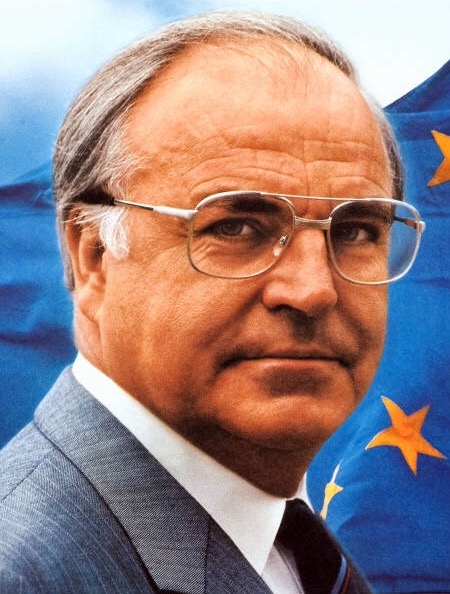
Helmut Kohl was laid to rest this week. At Speyer Cathedral, where his funeral mass was held, they draped his coffin with the German flag. But earlier at the European Parliament building in Strasbourg, where a strikingly young orchestra played the Ode to Joy, they covered him with the blue flag of the EU. You wonder what Nietzsche, prophet of the Good European, would have made of this man, this blundering statue of a German, so big and so small, like Nietzsche himself; so German and so un-German. He was a figure, it seemed, out of Stendhal. This center-right defier of the Bundesbank, Reagan and good liberal logic; this Catholic Rhinelander elected in the home of the Reformation; as Olympian as De Gaulle and as folksy as George W. Bush; canny and ingenuous, unifying Germany and taking his political funds in small notes tucked into unmarked envelopes; this pilot of a “kindhearted Europe,” in Emmanuel Macron’s words, a political animal who nursed Angela Merkel, the Valkyrie of austerity.
Wolfgang Schäuble is another of Kohl’s gifts to Europe– a man whose name by now is a byword for quiet war in Europe, for German posturing and chest-puffing in front of Paris, of Greece ground into nothing by piratical debts, of all the aggression and coercion of 1939 and 1914 and 1871 and 1618 papered over with the thin pages of the Treaty of Maastricht: the bit about division of the European continent, and solidarity, and ever closer union.
Enough has been said by now about Helmut Kohl, about German unification and about his abiding faith in European unification. But there are two points in his career that I would like to recall.
Well, three points. The first is that the man loved to eat, especially country cooking, and even published a cookbook with his wife Hannelore. His favorite dish to ease visiting heads of state into an amenable mood was, infamously, Saumaugen, a dish minced pork and potatoes sewn up in a pork stomach and boiled. This alone qualifies him as the greatest European statesman in recent memory.
Moving on, though, Merkel seems every bit the canny conservative that her mentor was. Look at her gay marriage maneuver last week. Merkel called a snap vote on gay marriage, made a show of opposing it, and watched it pass in the Bundestag. It worked. She satisfied both conservatives of her good will and leftists of her wise administration, just ahead of the general election. Kohl’s abortion program — keeping it illegal in former West Germany but legal in the former East, with a reconsideration sometime in the future — was just such a move. A Christian Democrat and one of Europe’s prominent Catholic statesmen, Kohl couldn’t liberalize abortion without major backlash from his voters. But Kohl’s heart lay closer to the center than many of his voters’. (In 1990, Vanity Fair noted that for a conservative Catholic so famous for his appetites, Kohl had only two children in his many decades of marriage, spaced neatly apart by two years: hard to pull off without certain kinds of help.) The gamble almost sank unification. But, like Merkel’s, it worked.
But the most striking thing about Helmut Kohl is what none of the obituaries are talking about: that he defied the Bunesbank and threatened the strength of the Deutschmark, for the sake of a unified Germany.
West Germany was an industrial superpower, East Germany was a languishing post-communist state. The Bundesbank was terrified that East Germans would weaken the Deutschmark; in the end, ironically, it was the Deutschmark that kept East Germany weak, as newly liberalized factories scrambled and then failed to keep up with the demands of the new currency and the abundance of cheap imports from countries like Japan. It was not a well-thought-out process by any means. The fact that Kohl pulled it off, again, on the eve of an election (politicians like Kohl spend their entire lives on the eve of an election) doesn’t make the episode look any less like a failure.
But for all that it was bungled, and for all the cynical politics attached, the monetary union was also an act of patriotism. It was an act of courage and faith, a leap into a new Germany. And between the advice of the banks, and the needs of his country, Kohl chose the latter. Twenty five years later the Bundesbank would make a similar pronouncement about Greece — that bringing Greece in from the cold was suicidal, at least without massive austerity. The year 2015 needed a good European, in Nietzsche’s terms, in Berlin — not a narrow German. The beefy Rhinelander with a country accent would have fit the bill better than any of his successors.

